Good news! If you’re reading this, it means that the world did not end on December 21 after all. Well, that or Standpoint has a more effective distribution network than we suspected.
Because of deadlines and so forth, I’m writing this in advance of Doomsday, so it’s possible that between my now and your now, when you’re reading this, someone else will have remembered that the world was supposed to be ending and they’ll have given it some coverage. So what I’m going to say might be old hat by now.
That’s the problem with trying to predict the future. You never know what’s going to happen.
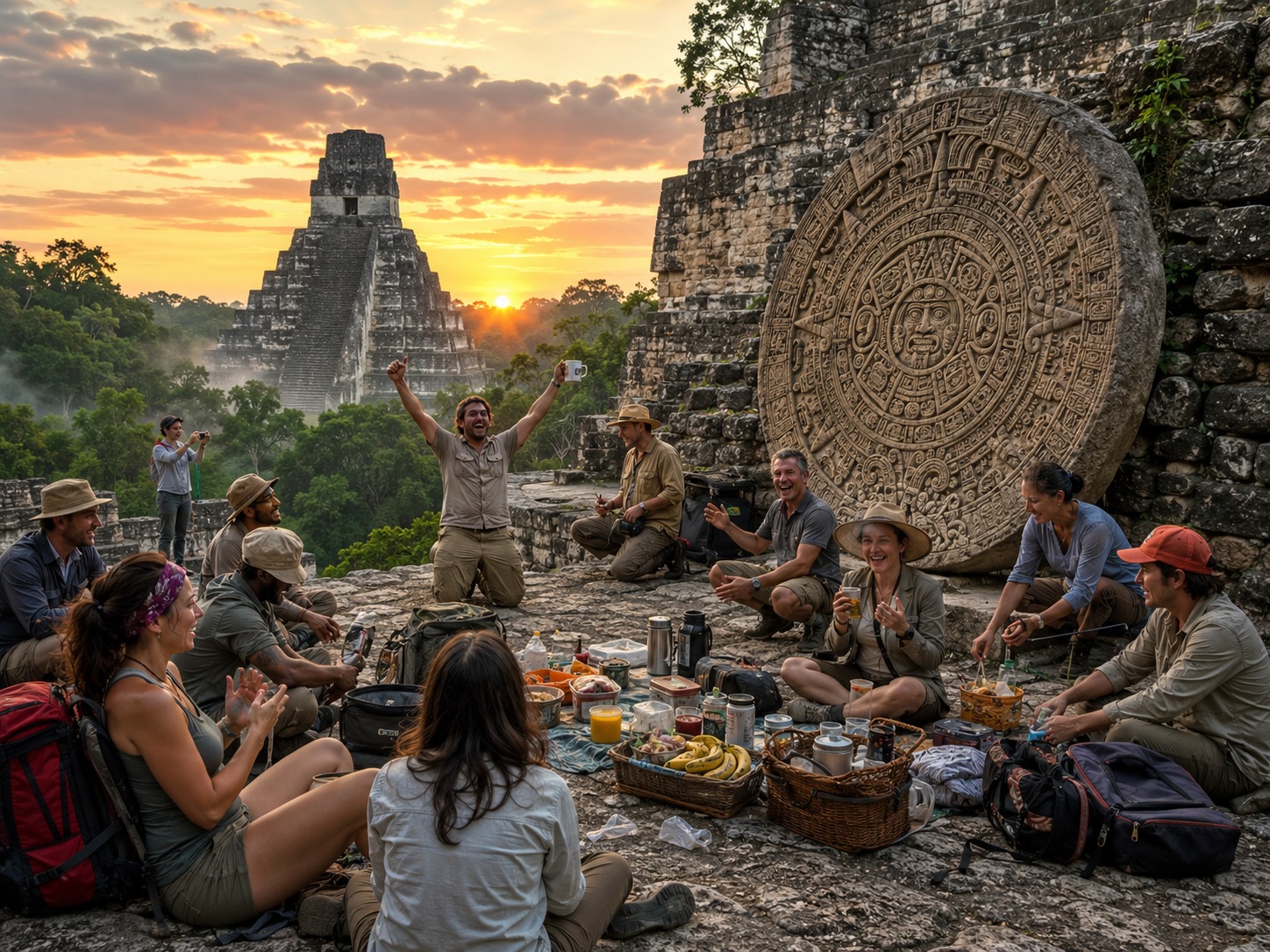
Anyhow, I’ll assume that you’ve forgotten about the Mesoamerican Long Count Calendar. The Ancient Mayans had a calendar based on a mixture of 18 and 20: so 20 days made 1 winal; 18 winal made 1 tun; 20 tun made 1 katun; and 20 katun made 1 baktun, or a complete round of the calendar. That made each baktun, or long count, equivalent to 144,000 days, which the Mayans regarded as an historical period (a little over 394 years).
The Mayans also had a more conventional 365-day annual calendar for everyday use, and confusingly a 260-day calendar for timing religious ceremonies. The Long Count did however provide a way of assigning a unique identifying number to any date over a long period of time and that seems to have been what it was used for.
So, why the fuss? Well, by deciphering Mayan inscriptions it can be deduced they believed the gods created the world (at their third attempt) on August 11, 3114 BC. Which means that the 13th baktun of the current world, a period of 5,125 years, ends on December 21, 2012. Hence, we are told, the Ancient Mayans predicted that was when the world would end.
Quite what specialist insight the Mayans possessed is unclear. The first Mayan settlements date from 1800 BC. After a flourishing civilisation they collapsed around 1100 AD. The Mayans don’t seem to have foreseen the severe droughts that laid them low.
The arrival of Cortès is something else they missed. Nor is it obvious that they thought the world would be ending around now. The time might have spiritual significance, but that’s all. Mayans calculated the time of astronomical events well past this date, assuming that the date is correct, which isn’t certain.
The first suggestion that the ending of baktun 13 might be Armageddon came in 1966 in The Maya by Michael Coe. It was not picked up outside professional Mayanists until 1975. Coe had got the date wrong, and consensus as to the precise timing of the apocalypse was not attained until 1983.
By the 1990s the idea had been taken up by the New Age industry, such as the egregious “alternative historian” Graham Hancock, and jumbled with all sorts of pseudo-waffle about galactic alignments, proton beams, black holes, etc. Roland Emmerich used the idea for a film in 2009, as his latest attempt to destroy the world after alien invasion and ice age (it was banned in North Korea for some reason). A NASA website has been bombarded with queries about the subject and, we’re told, some Brazilian mayors have been stocking up on food supplies.
So, congratulations for surviving the end of the world—again. All we have to do now is start worrying about the end of the next long count in March 2406.
Oh look—the stars are starting to go out.