Until recently, our picture of Mali’s heritage was a blurred one. If the events of the past year have served one purpose, it is to have brought it sharply into focus.
Since April 2012, Islamic militants had been reducing listed monuments in the historic towns of Douentza, Goundam and Timbuktu to rubble. International observers and much of the local population looked on in dismay as radical fighters tore down shrines and tombs they considered idolatrous. “Not a single mausoleum will remain,” boasted Abou Dardar, leader of Ansar Dine, a group suspected of ties with al-Qaeda in the Islamic Maghreb.
In January, as French troops moved out of the capital Bamako to secure the northern reaches of a country largely beyond government control, reports emerged of even further damage: Timbuktu’s Ahmed Baba Institute was said to have been torched, along with some 20,000 documents. The town’s mayor declared the collection, a section of Mali’s rich literary tradition which included texts dating back as early as the 13th century, had been destroyed.
Such events are all too common. The past two decades have seen the wilful destruction of the Institut d’Egypte in Cairo; Iraq’s National Library and Archive; and the Kabul University Library. Hundreds of thousands of books have been lost, burnt and looted by angry mobs or falling governments.
Yet historically, such ill-minded acts have not always achieved the desired effect: in ancient Iraq and Turkey, those who set fire to libraries often unwittingly preserved the texts contained within. The documents, regularly written on clay rather than paper, would simply harden at high temperature. This is true, for instance, of the palace library of Ashurbanipal, near modern Mosul, ravaged by a great fire more than 2,500 years ago. Many of its documents have survived to this day.
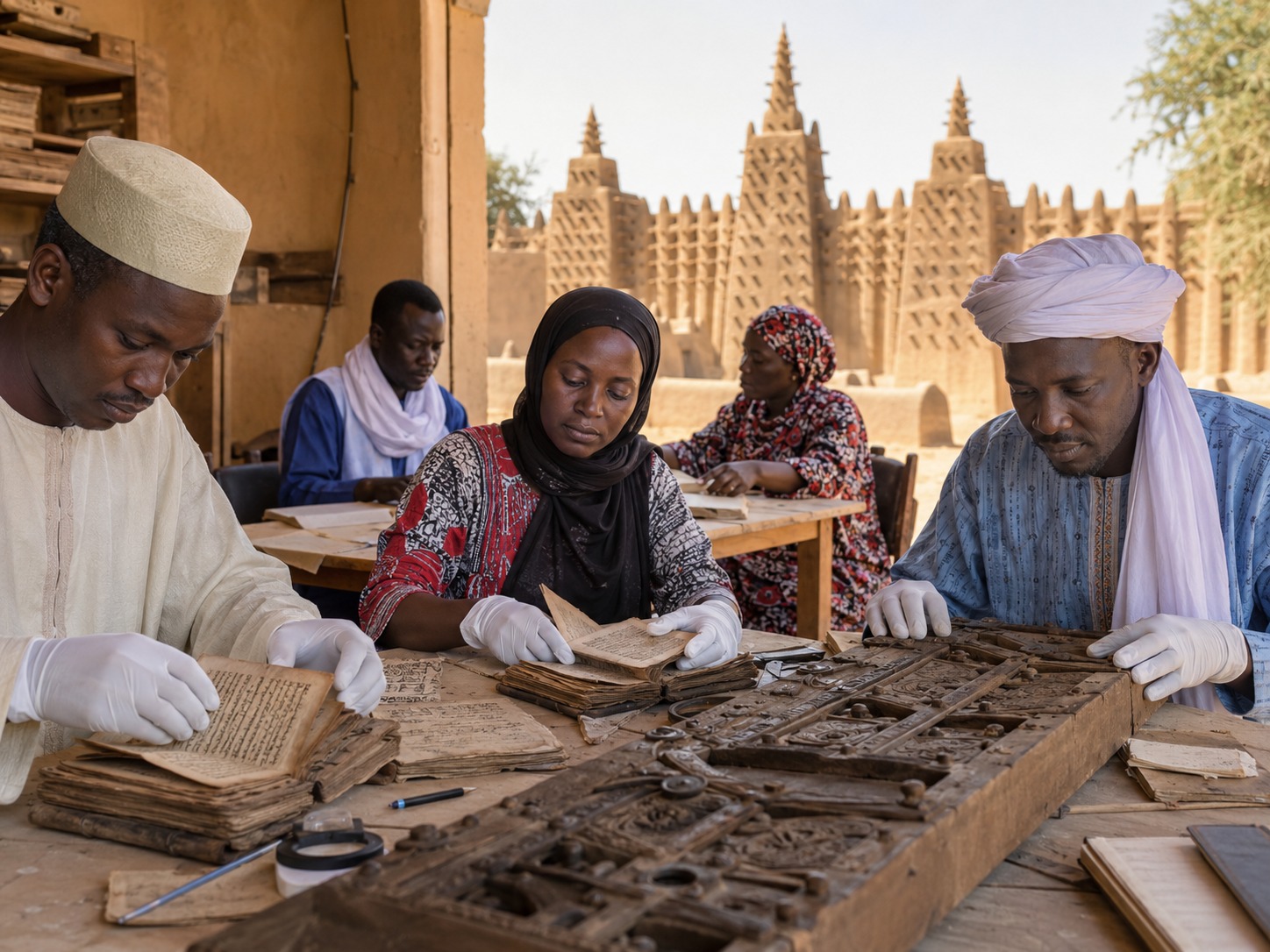
The destruction of manuscripts in Mali may ultimately bring about a similar result. It has already heaped media attention on these artefacts and triggered a response to threats against cultural heritage. France has pledged to help restore the damaged documents and buildings. South Africa and others will no doubt follow suit. “The recent events in Mali have made our efforts in the country more urgent and indeed a top priority,” says Karalyn Monteil, programme specialist at the Africa Unit of Unesco’s World Heritage Centre. The agency, which has long been involved in Mali, has vowed to raise $11 million to save its archaeological riches.
It is not too late to act. Although Ahmed Baba was Timbuktu’s most modern repository, the majority of the town’s archives, which are family-owned, remain largely unharmed. At the Institute itself, the latest reports indicate around 2,000 texts were destroyed, much lower than initial estimates. Many manuscripts were smuggled to safety by local inhabitants, with the assistance of the German Foreign Ministry. But much still needs to be done to ensure the remaining documents do not come into harm’s way.
Timbuktu’s name has come to represent any remote or fantastical place. The events of the past year should at least serve to inject a sense of reality and urgency into this clouded view. One hopes the burning of libraries, as in ancient times, will have an unintended consequence: to raise public awareness and serve as an incentive to act.
YARPP Thumbnails
YARPP Thumbnails