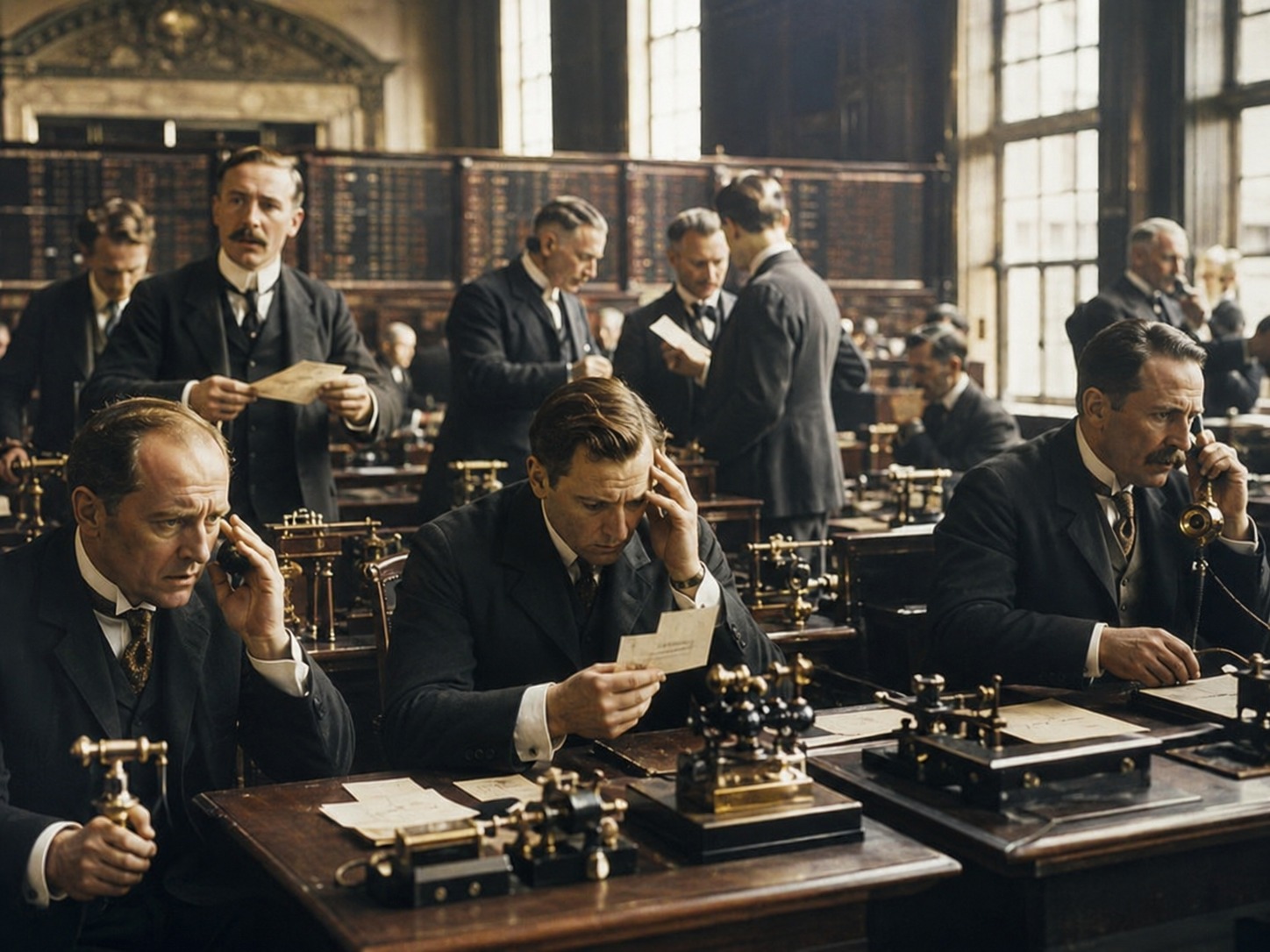
Who started the First World War? Well, who was ready for it? Not Lord Rothschild. There was trouble in the Balkans, he said, but it would all blow over. Within days the City of London was in crisis, with banks facing ruin, the Stock Exchange closed, and a run on the gold sovereigns in the Bank of England. Even the great Rothschild had been wrong, but other people, elsewhere, had known better. Richard Roberts in his new history, Saving the City (OUP, £20), points the finger.
The trouble had started, of course, in Sarajevo, where a Serbian student had murdered the heir to the Austro-Hungarian empire. One week later — that is, on July 5, 1914 — Kaiser Wilhelm gave his Austrian allies a blank cheque. In any war with Serbia, he promised, Austria would have Germany’s full support, even if that meant war with Serbia’s ally, Russia. The City’s markets remained calm. They had seen war scares before.
Then, on July 18, a big German bank, Dresdner, turned seller and began to dump stocks on the Berlin bourse. Had Dresdner’s people worked out what was coming, or had their card been privately marked? Sir Edward Holden, chairman of the Midland Bank, was to call this “the first semi-official intimation of a European conflagration”. Five days later, a surge of selling broke over Vienna, apparently and suspiciously well-informed, because Austria’s ultimatum to Serbia went out that evening. By the first week in August, the fire was alight and burned on for four years.
For this, the Bank of England was no readier than the rest of the City. In Berlin, though, its opposite number, the Reichsbank, was fully prepared. It had been stockpiling gold and printing banknotes in case of emergency, and its planning has been called “a worthy counterpart to the Schlieffen Plan”, which in 1914 sent the German armies rolling across Belgium, with the last man on the right set to brush the Channel with his sleeve.
Now, a hundred years later, historians are asking how it all happened and who was to blame. There are, at least, grounds to believe that Germany was expecting a war — and sooner, for preference, rather than later. Money is part of the evidence and, as is its wont, tells its own story.