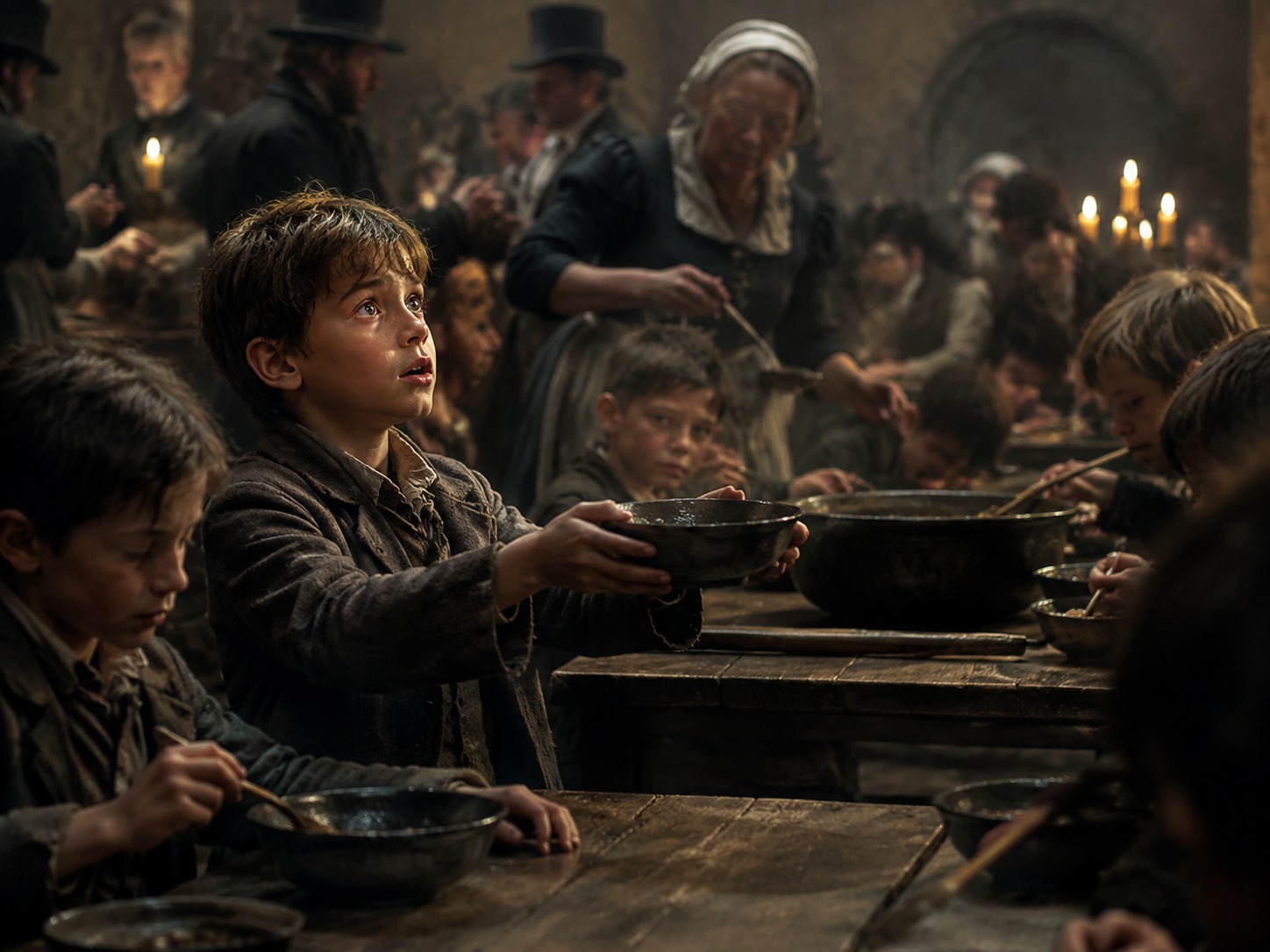
The characters in Charles Dickens have voracious appetites and the act of eating is something savoured, whether by workhouse boys licking “stray splashes of gruel” from their fingers or the Cratchit children “steeped in sage and onion to the eyebrows”. The reformer in Dickens found food a rich social metaphor, not just for greed, but for status, pride and pretension. We are reflected in our palates, or so says Mr Bumble when he accuses Mrs Sowerberry of feeding Oliver meat: “You’ve over-fed him, ma’am. You’ve raised a artificial soul and spirit in him.” If we are what we eat, the young Pip in Great Expectations is allowed only “those obscure corners of pork of which the pig, when living, has had the least reason to be vain”. When he later receives a fortune he plans a village feast, serving “roast beef and plum-pudding, a pint of ale, and a gallon of condescension”.
So how did Dickens dine? Food Glorious Food, an exhibition at the Charles Dickens Museum, London (until April 22), tells us he presided over seemingly endless dinner parties, thrown to entertain friends in theatre and publishing. His wife Catherine was an accomplished cook who published a selection of recipes for up to 18 guests in What Shall We Have For Dinner? In September 1843, the Dickens served “Turtle and Venison and Lamb and Ham and Goose . . . Hock, Sherry, Moselle, Madeira, Champagne, Port, Ices and Creams and Pine apples.” Hard to accuse him of skimping. On another occasion, the stern critic Jane Welsh Carlyle resorted to ridiculing their “overloaded dessert! Pyramids of figs raisins oranges”.
But for Dickens, there is a delicate line between pomp and generosity. He loathed formal parties, calling them an “unspeakable abhorrence”. He was also among the first to drop the precisely symmetrical à la française style of arranging plates, a relic of the 17th-century French court. Instead, he adopted the infinitely less dreary à la russe, in which guests are served by footmen with food straight from the oven.
On one relaxed evening in April 1849, the sly poet Samuel Rogers retired from the room, insisting he felt ill. Four other guests followed, and just as incriminating murmurs began to arise, it was revealed to be a ruse. The party erupted “in uproarious mirth”, nobody more so than Dickens himself, probably relieved not to have poisoned his guests. He needn’t have worried. If seconds were offered, I’m sure, like Oliver, they’d have all asked for more.