A new play, Pressure, at Chichester coinciding with the 70th anniversary of D-Day, brilliantly shows what went on with the postponement of the Normandy landings from June 5 to June 6, 1944. The skies had been clear for several days and a warm front was predicted to be coming up the English Channel on June 5. So who decided to postpone the invasion, and how good were weather forecasts at that time?
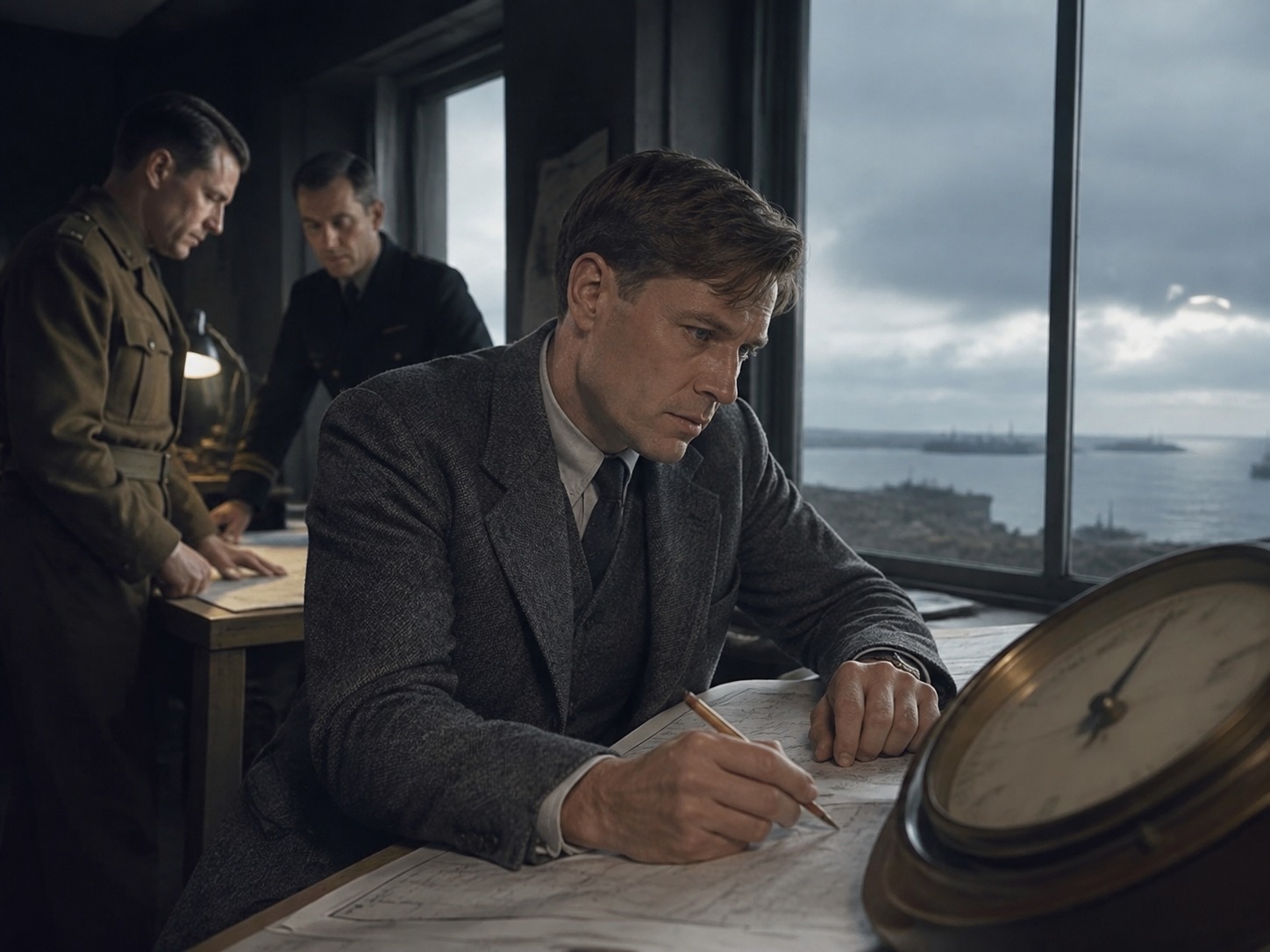
The answer to the first question is Eisenhower, and the answer to the second gets us into the heart of this gripping play by David Haig, which deserves a transfer to the West End. Its title reflects three sorts of pressure: the barometric kind, the forthcoming invasion, and the family pressure on Scottish meteorologist Dr James Stagg, whose wife is in the final stages of pregnancy. The birth of her first child was difficult and she is starting to suffer from high blood pressure. Meanwhile Dr Stagg (played by Haig), in the uniform of a group captain, is at an undisclosed location with very senior military personnel from Britain and the US. He cannot visit the hospital. If he does he will be arrested immediately and charged with desertion.
Weather forecasting is as old as the human race. Long-term forecasts were often dependent on observations of animals and birds, and short-term ones on sayings such as “Red sky at night, shepherds’ delight; red sky in the morning, shepherds’ warning.” The scientific basis for this is sound: the red glow is due to small dust particles trapped in the atmosphere by high pressure, and assuming prevailing winds from the west a red glow at sunset means high pressure approaching, but at sunrise it’s departing.
In this carefully researched play the US military weather forecaster sees a ridge of high pressure approaching the Channel and is confident of good weather for June 5. Stagg is not so sure. As he says to Eisenhower when they first meet on June 2, “Long-term forecasting is only ever informed guesswork.” When Ike objects that Friday to Monday is hardly long-term, Stagg responds: “In this part of the world anything more than 24 hours is long-term.”
Indeed, and although radio communications allowed the latest figures to come in from weather balloons and ships at sea, collated via calls to the several telephones in Stagg’s temporary new office, it’s the interpretation of the figures that counts. This is where human intelligence and experience come in, particularly Stagg’s deep knowledge of rapidly-changing North Atlantic weather patterns.
Yet to what extent can Eisenhower rely on this dour Scotsman, who cannot possibly be mistaken for a ray of sunshine? I won’t spoil the plot, but suffice it to say that you can have all the figures, update them at regular intervals, but there is no substitute for the experience of one man who is willing to be a contrarian.