In 2008 France was rocked by a fierce controversy when a medievalist academic named Sylvain Gouguenheim published an essay. Contrary to majority opinion, “Aristotle at St Michael’s Mount” argued that Muslim Spain in the Middle Ages had not acted as a conduit for the transmission of classical Greek texts to the West. Syriac Christians, rather than Arab Muslims with barely a knowledge of Greek, he contended, had ensured the preservation of Greek civilisation.
Hundreds signed petitions and letters to the press, rounding on Gouguenheim and accusing him of Islamophobia. Few academics came out in his defence. His ideas fell foul of the politically-driven agenda to promote “Golden Age” Spain as a brilliant period of interfaith coexistence. The witchhunt demonstrated the dangers of attempting to dislodge prevailing myths.
Darío Fernández-Morera, a professor of Spanish and Portuguese at Northwestern University, must be commended for daring to wade into this hazardous arena. He has come well-armed: his The Myth of the Andalusian Paradise has 95 pages of notes, and the lionisers of political correctness will not find it easy to penetrate chinks in his bibliographical armour of primary and secondary sources, many not published in English.
In an exhilarating and unput-downable read, Fernández-Morera debunks the fashionable myth that Muslims, Christians and Jews lived together (convivencia) under “tolerant” Muslim rule. He prefaces each chapter with a quote by scholars, politicians and respected publications extolling the Andalusian paradise. World-class academics — hailing from Yale, Harvard, Chicago, Princeton, London, Oxford — look like fools in their apologetics for jihad: the violent Muslim conquest of Spain euphemistically described as a “gentle migratory wave”.
The very renaming of Spain (from the Latin Hispania) as al-Andalus in order to avoid offending non-Christians is one of several “hegemonic manoeuvres” to disguise a dystopia built on slavery and Islam’s “imperialist system” of strict separation and subordination for non-Muslims. According to Fernández-Morera, coexistence was never more than precarious. Jews and Christians lived as subaltern dhimmis who paid a jizya tax to live under Muslim protection. But, the author claims, the dhimmi system was never other than a Mafia-style protection racket.
To ensure their survival, non-Muslim communities built a wall of exclusionary practices “for fear of the Other”. Strict rules ensured that no heresy could be tolerated. Thus the Karaites of Spanish Judaism died out.
Throughout the six centuries that Islam ruled Spain, it was always under external pressure from the Christian Reconquista. Insurrections by muladis, Christian converts to Islam (in the notorious Massacre of the Ditch, 5,000 muladis were beheaded and crucified), plagued the “paradise of al-Andalus”. Gradually the Christians clawed back every inch of Muslim Spain (from which Christians had been systematically expelled). Only the city of Granada was beyond their reach until it was retaken in 1492.
The Maliki school of jurisprudence prevalent in Spain was conservative and intolerant: the much-vaunted age of Ummayad “tolerance” was characterised by persecution, beheadings and crucifixion. In true colonialist style, the Muslim conquerors did their best to erase local place names and languages. They ruthlessly destroyed churches and built mosques on top of them.
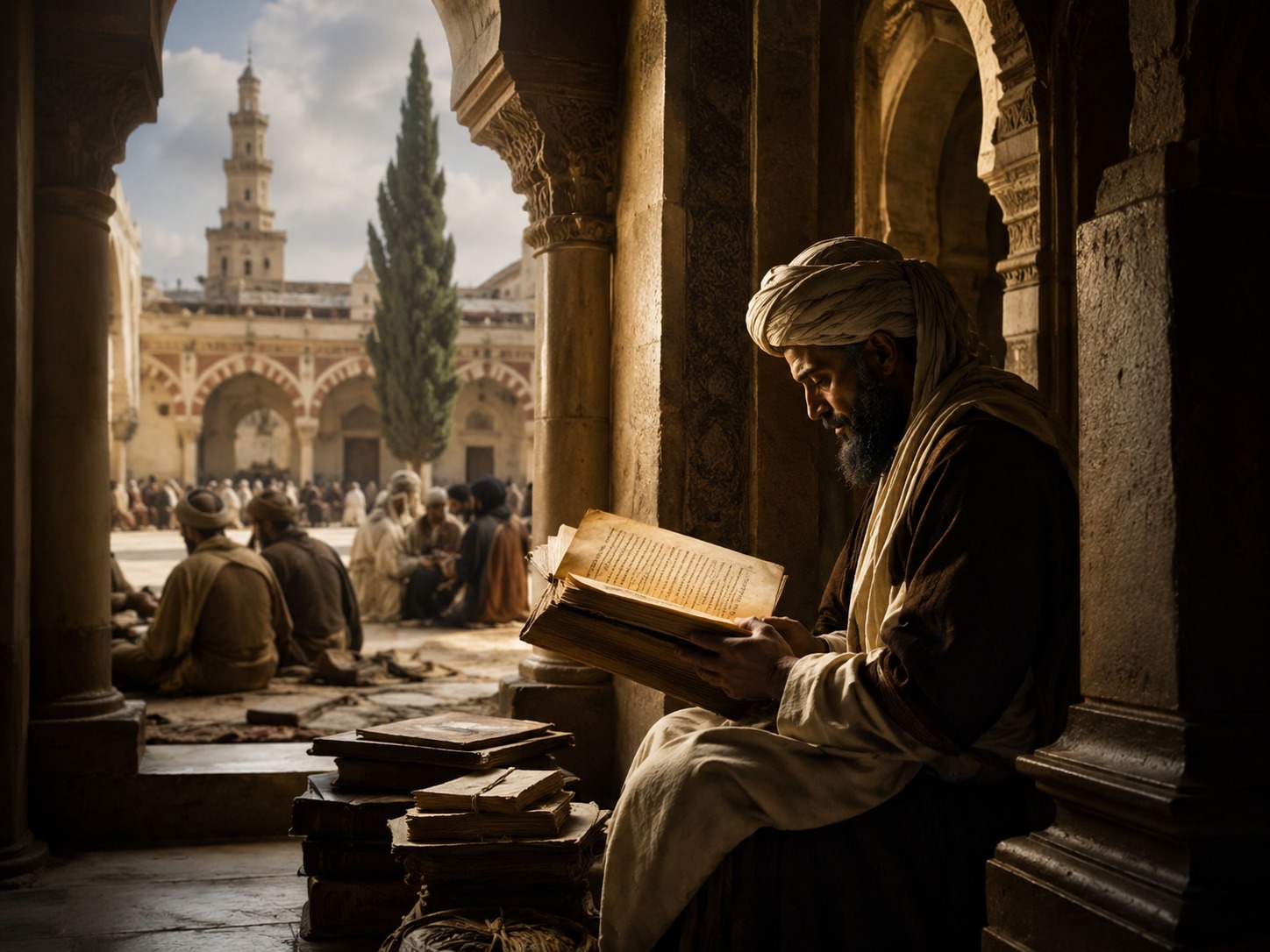
Naturally, Fernández-Morera echoes Gouguenheim’s theory that Byzantine monks were already translating Greek texts into Latin. It was “baseless” to say that Islam preserved classical knowledge and passed it on to Europe. In fact Islam slowed down the exchange of science, art and poetry. Many of the so-called Muslim luminaries of the Golden Age turn out to be of non-Muslim or non-Arab ancestry, if not themselves Christians and Jews.
More controversially, Fernández-Morera contends that the pre-Islamic Visigoths have received an unfairly bad rap: they had already laid medieval Spain’s rich cultural foundations. The Visigothic anti-Jewish restrictions, designed to lead to the disappearance of Judaism, were often worse than the dhimmi regime’s, causing Jews to side with the Muslim conquerors, but Fernández-Morera claims that the Visigothic anti-Jewish rules were often ignored.
If it were not for the Reconquista, Spain would have become a “ham and drink-free” zone. Western civilisation would have stopped at the Pyrenees. It took several centuries for Christian Spain to achieve its own literary Golden Age.
But this was also the age of the Spanish Inquisition, and so many of the glorious literary figures cited by the author are conversos from Judaism, or have Jewish ancestry, that Fernández-Morera’s concluding paragraphs are a whitewash. The Spanish Christian Golden Age seems only to have replaced one cruel and intolerant system by one even worse — at least as far as Spain’s Jews were concerned