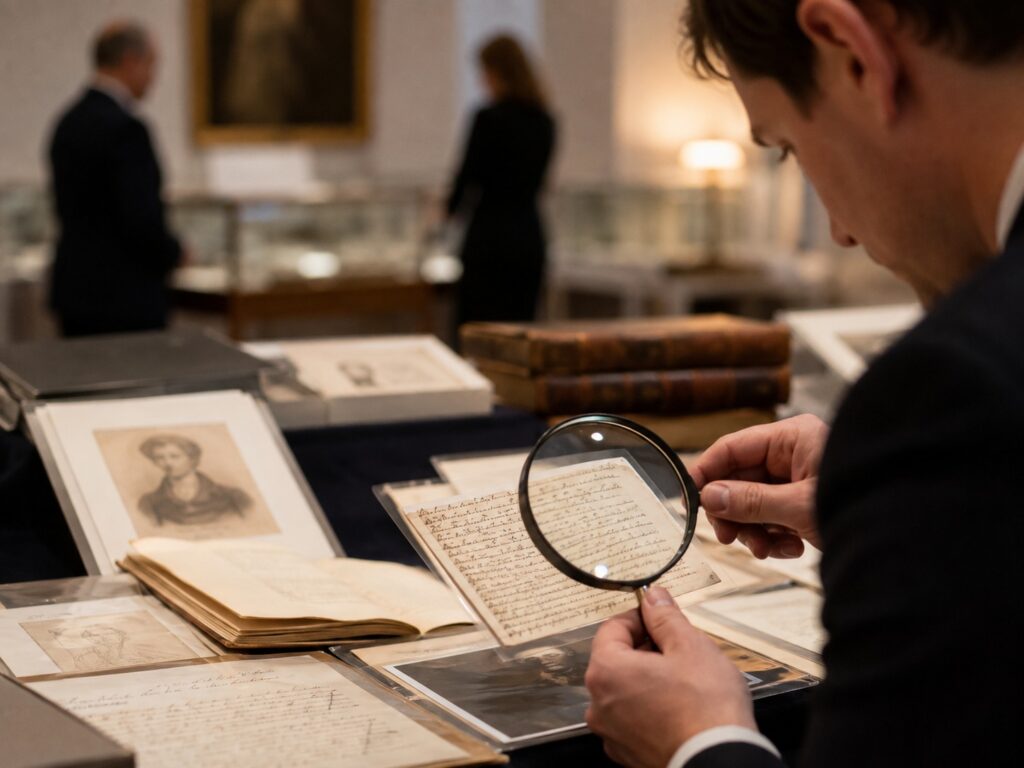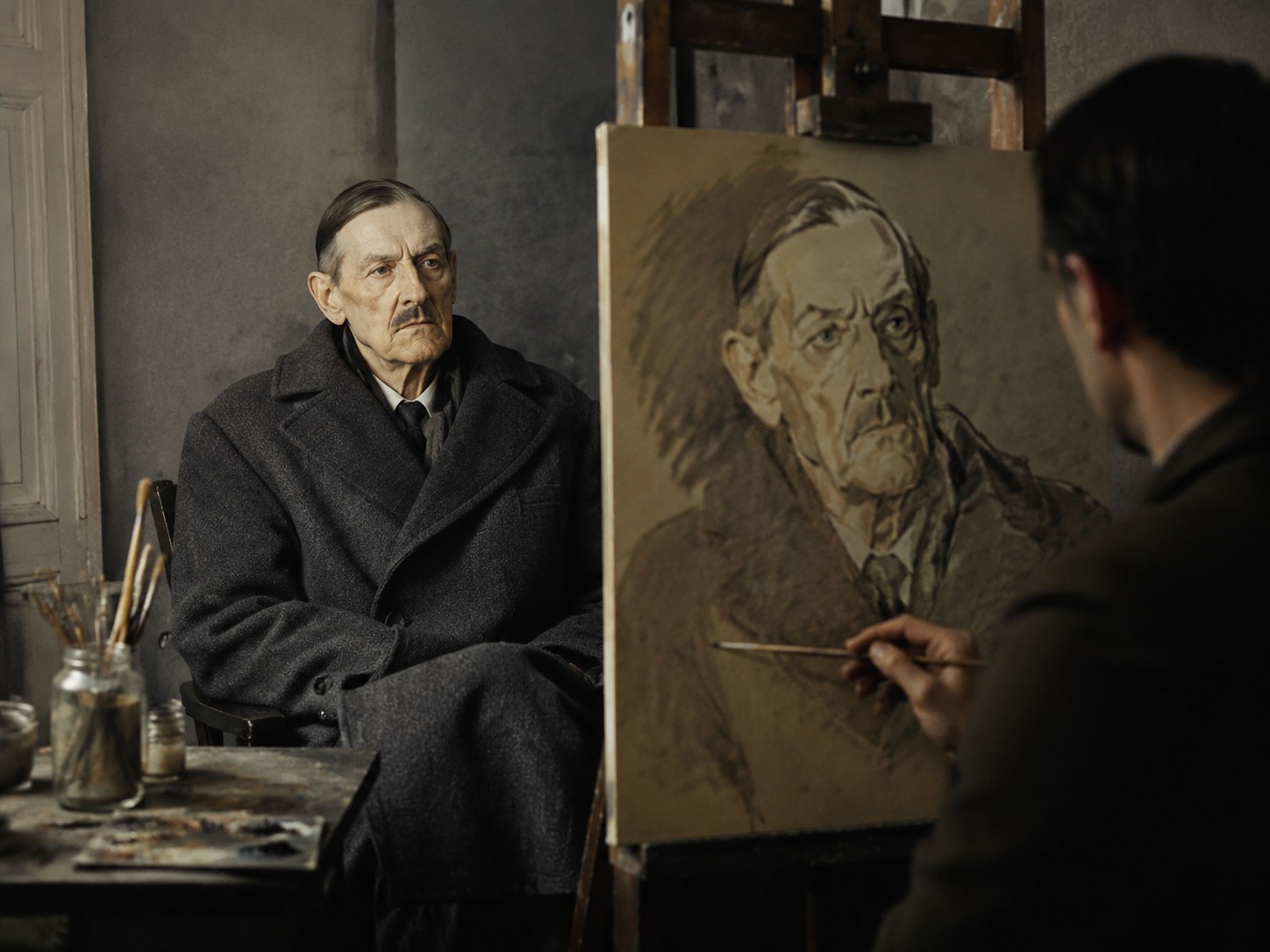
For a literary grandee with striking features-all angled nose, chin and eyebrows-T.S. Eliot was much photographed but surprisingly little painted. Wyndham Lewis painted him twice, including one portrait that was rejected by the Royal Academy in 1938 for including a “phallic reference” in the background, but no other artist of note. In 1947 the young Patrick Heron tried his luck on the strength of his father and the poet being friends.
The first sitting took place at the offices of Faber and Faber with Eliot wrapped in his overcoat due to a prohibition on using electric fires in the late morning. Heron’s initial drawings were to establish the “plastic facts” of Eliot’s physiognomy. Further sittings took place three years later. Heron described, in a rather purple passage, staring into the poet’s “grey eye” and likened it to “looking into the most conscious eye in the universe . . . into the very centre of contemporary consciousness”. Eliot, for his part, exclaimed on seeing Heron’s drawings: “It’s a cruel face, a cruel face: a very cruel face! But of course you can have a cruel face without being a cruel person!”
The portrait that resulted was not a traditional likeness but a Cubist treatment, part way between realism and abstraction, that reduced Eliot to coloured planes and contours. The painting hangs in the National Portrait Gallery where it can now be seen alongside Heron’s studies. Among them are two previously unseen works-one a tonal oil sketch, the other a thoroughgoing Cubist reduction-that show the painter’s intention to view every part of the picture as equal, with the head having no more prominence than “the large coffee-pot in my latest still-life”. Eliot, the man who wrote “I have measured out my life with coffee spoons”, was nevertheless startled by the irreverence.
All images are taken from “Patrick Heron: Studies for a Portrait of T.S. Eliot”, which runs until September 22 at the National Portrait Gallery, London.