Honoré Daumier (1808-1879) is often compared to Emile Zola. It is easy to see why: both embraced realist techniques to chronicle ordinary urban life in an age of seemingly endless social upheaval.
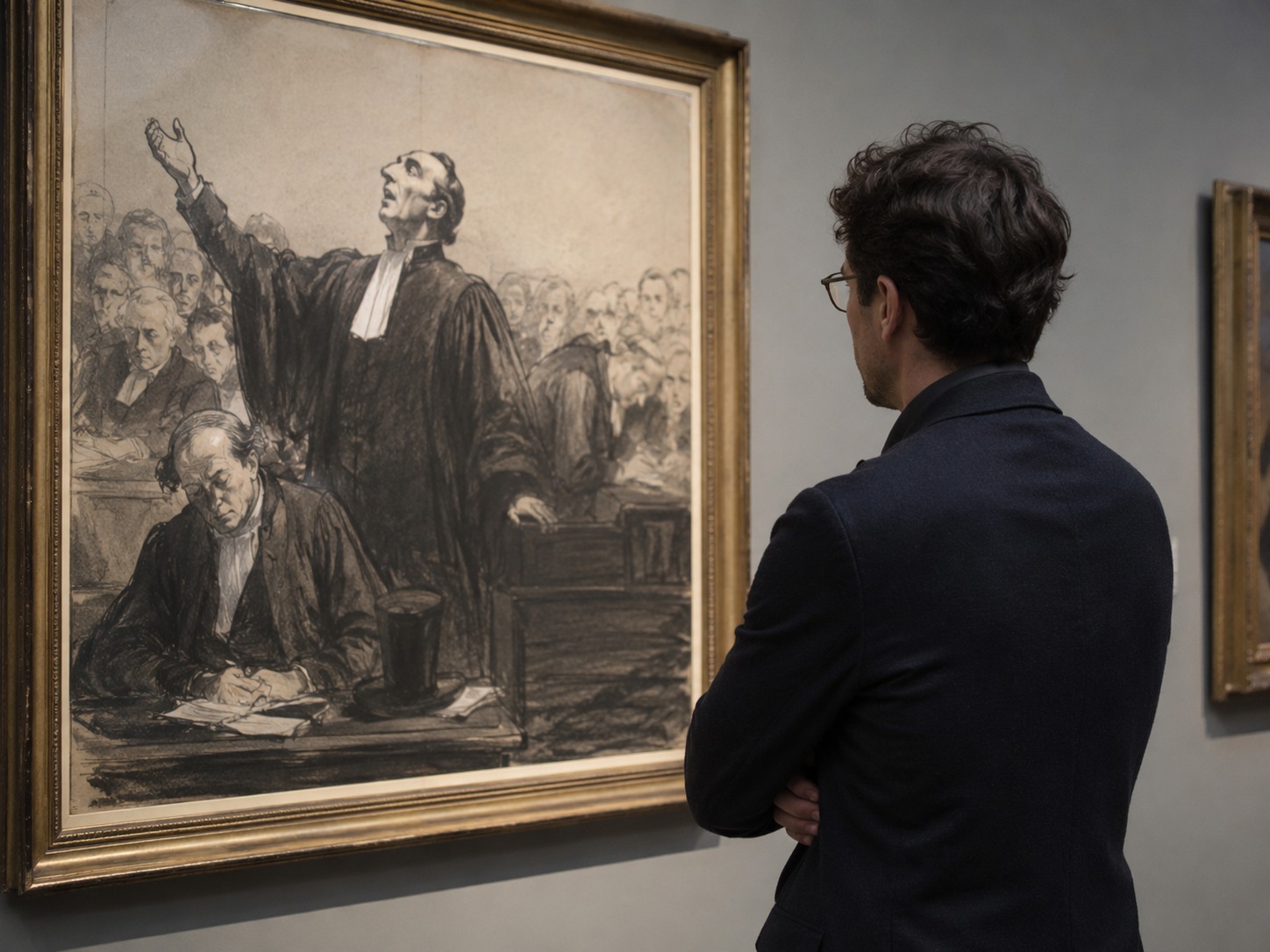
From October 26 until January 26, 2014, the Royal Academy will show London’s first major exhibition of Daumier’s work, which spans many decades and many mediums. Armed with a mellow palette and a caustic wit, he drew his first politically charged caricatures for journals such as Le Charivari (the model for Punch), lampooning the mannerisms of those in power while casting a sympathetic eye on the working class. His particular distaste for lawyers is on full display in The Defence (c.1865). His bold drawings and biting social commentary led to him being called “the Michelangelo of Caricature”.
Later, the growing middle classes became both Daumier’s primary subject and his main audience. In Lunch in the Country (c.1868), he portrayed bourgeois Parisians enjoying their new-found leisure. In works such as The Print Collector (1857-63), a superb study of light and shade, he depicted their pursuit of pleasure.
No matter what his medium or his subject, Daumier insisted on holding up a mirror to society. He never ceased to reflect on how shifting class boundaries were changing France as he knew it.