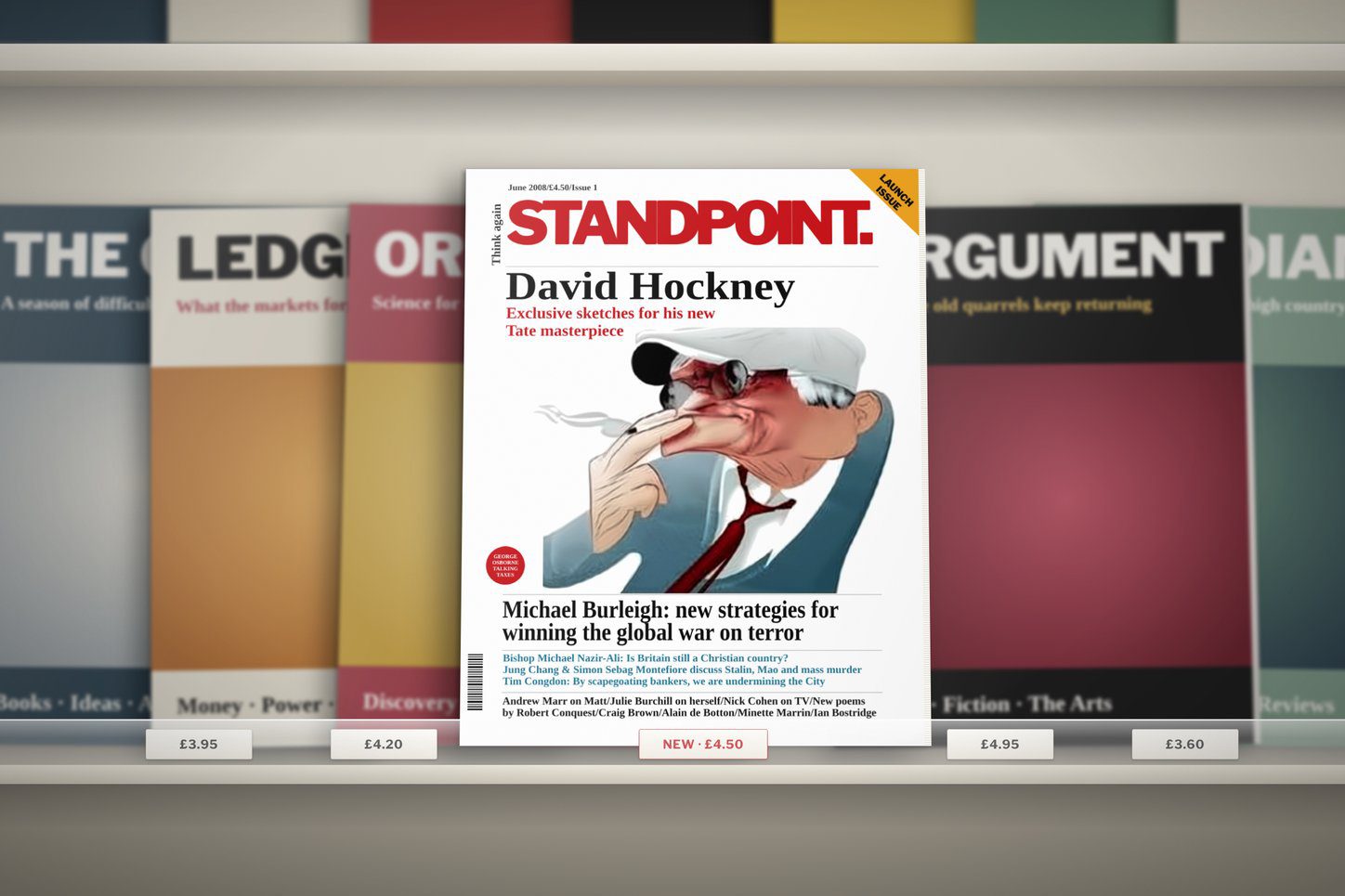
It is the end of May 2008. Standpoint, a new monthly political and cultural print magazine, is holding its launch party at the Wallace Collection in London’s Manchester Square. As the champagne flows and canapés circulate, speeches welcoming the new title are given by Britain’s preeminent playwright Tom Stoppard and Labour MP Frank Field. The assembled throng includes David Hockney, Nobel laureate Sir Vidia Naipaul, Martin Amis, Barry Humphries (aka Dame Edna Everage), and myriad newspaper editors and politicians.
This crowd had been largely collected by Daniel Johnson, Standpoint’s founding editor and indeed progenitor. Daniel had been dreaming of a new monthly magazine with gravitas, the conservative counterweight to Prospect – founded by David Goodhart 13 years earlier. (David was still identifiably of the Left back then, although had already embarked on its long march to the Right).
Goodhart and Johnson had both been correspondents in Bonn in the late 1980s. Perhaps that is where the spark came for thinking what Britain was bereft of were newsstand periodicals aimed at the general reader which nevertheless took ideas seriously.
As luck would have it, a couple of years before that day in May, Daniel – an editor in want of a backer – found Alan Bekhor, a backer in want of an editor. Alan had been an enthusiast for Encounter magazine until it died in the 1990s.
Encounter had offered intellectual ballast to the West’s mission in the Cold War. Both Daniel and Alan felt that the West once more needed defending, from the Islamist threat both foreign and within our societies, and also from our intellectuals’ moral relativism which allowed bad ideas to spread.
I was in my early 30s and running a small think tank back then. I had become increasingly disillusioned as to whether the traditional think tank model of issuing reports was still working (in my view it isn’t, but that’s for another piece) and strongly felt that a magazine was a much better way of disseminating ideas (and I still do believe that this is the case).
In 2007 I became involved in the small team working to establish what became Standpoint (it was originally to be called New World, my preferred title was Provocateur, some truly awful options – The New Elizabethan, over 50 years too late for that gambit – were countenance). Others in at the start included the doyenne of literary editors Miriam Gross, to be followed shortly after our start by Fleet St veteran Bob Low. Throughout much of 2007 we had weekly meetings to discuss the magazine and we were finally set up in an office opposite the Wallace Collection in Manchester Square in January 2008.
Whilst having laboured in think tanks for a decade, I was a journalistic novice back then (not true now – I subsequently worked for over 10 years at Standpoint, set up The Critic and am now at The Telegraph). Back in 2007 my knowledge of the business of publishing monthly political newsshelf magazines was, shall we say, limited – I don’t mean to boast, but I suspect over my Standpoint and Critic years I can honestly say I became the UK expert in this particular niche field.
Setting up a newsstand print magazine was even in 2008 seen as a little eccentric. And it was only possible because we had a backer with deep pockets who was unafraid of losing money. It would now seem totally bizarre.
But it did have a logic then. Being a print title made one stand out from the online only competitors. It showed one was serious and WH Smith was a great shop window for our offering. It enabled us to rub shoulders, at least on that chain’s magazine shelves, from day one with veteran titles including The Spectator, New Statesman and The Economist.
We made mistakes along the way. We should have launched the title much earlier and not taken so many months working towards the launch. Accept the original product is not perfect (it won’t be regardless) and just get on with it. I did not repeat that mistake with The Critic, which went from concept to first issue in just over two months. We spent too much at the start and were forever trying to catch up. We weren’t sufficiently good at turning the obvious appetite for the title into paid subscribers. We took too long to accept that it was not uncouth to ask readers for money. (The Guardian has done a lot to make that approach salonfähig).
But Standpoint achieved much. It became a place to find outstanding writers and provocative ideas. It noticeably moved the political debate on issues from radical Islam to why defending historical rigour and honesty matters. It was early in calling out the return of anti-Semitism to British politics. With Julie Bindel’s reportage on grooming gangs, it was among the first to raise this torrid issue. The Brexit debate was played out on our pages, mainly but not exclusively on the Brexit side. Our then charitable ownership structure prevented us from coming out for Leave.
Admittedly, some of the causes it championed – such as Atlanticism – are now in much worse shape, but that is Trump’s fault.
Is Standpoint still needed? You bet it is. And that is why it is so refreshing to see the title reemerging and being ready to once more take up the intellectual cudgels. May it prosper.